
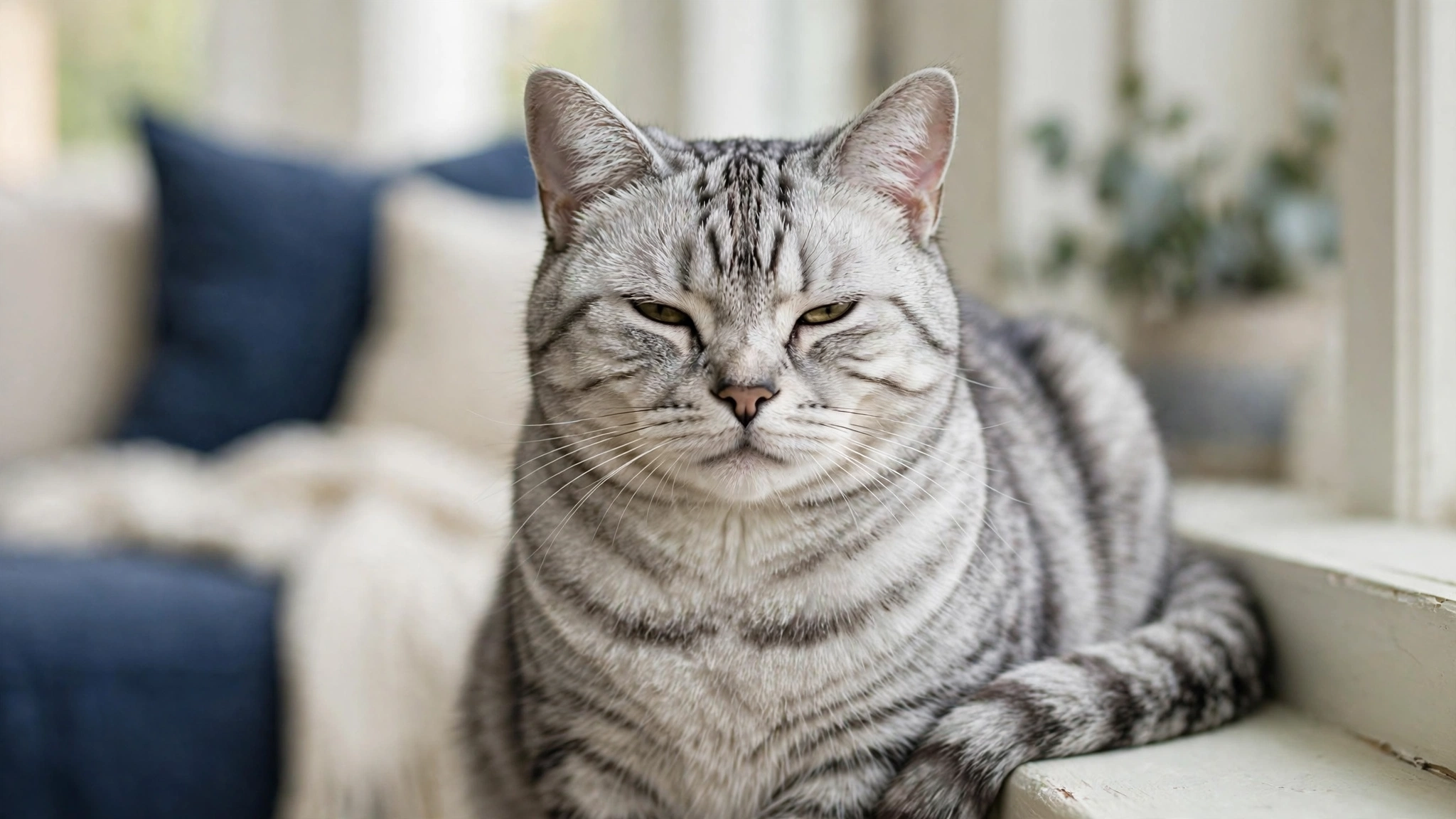
Cats communicate constantly, and much of it is visual: the tail, ears, eyes, whiskers and the shape of the whole body. Because the signals are quieter than a bark, they are easy to miss or misread.
This guide summarizes what veterinary and feline welfare sources say about common tail, ear and posture signals. These are patterns, not translations. The same movement can mean different things in different situations, and individual cats vary, so the most useful skill is reading the whole cat in context.
Start with the whole picture
International Cat Care, a feline welfare charity, describes cat visual signals as a combination of body posture, facial expressions, pupil size and the ability to raise the hair on parts of the body. PetMD's guide to cat tail language, written by veterinary behaviorist Alison Gerken, DVM, DACVB, makes the same point: cats use tail movements together with their eyes, ears and body posture. Treat the tail as one clue among several.
Tail signals
- Tail held up. International Cat Care says a tail held vertically generally signals friendly intent when a cat approaches another cat, animal or person, usually with ears up and whiskers relaxed. PetMD adds that a slight curl at the tip, like a question mark, is also an amicable approach.
- Tail low or tucked. PetMD says a tail held below the level of the back may indicate fear or anxiety, and a tail tucked between the legs may mean a cat is very scared or in pain. International Cat Care also describes a tucked tail as often a sign of anxiety or fear.
- Puffed tail. When the hair stands on end, the cat looks larger. International Cat Care notes that a bushy tail with an arched back and sideways stance is a hostile "stay away" signal to other cats, and that some cats puff the tail briefly when suddenly startled before investigating. PetMD describes it as a defensive reaction suggesting the cat wants to be left alone.
- Slow side-to-side movement. International Cat Care says a tail held out and moving slowly across the body may signal frustration.
- Thrashing or thumping. PetMD says this can show irritation or annoyance and may come before hissing, swatting or biting if the situation continues. If your cat does this while you pet them, it is a good moment to stop.
- Twitching tip. PetMD notes that cats twitch the tail tip while hunting and playing, and also when mildly irritated or frustrated. That is a clear example of why context matters: the same movement can be fun or annoyance.
- Tail wrapped around the body. PetMD says a cat sitting or lying with the tail wrapped tightly around them may be frightened, defensive, in pain or unwell.
Ear signals
According to International Cat Care, relaxed cats tend to have ears facing forward in their normal position. Ears that are erect and rotated outward along with narrow pupils usually signal frustration. Dilated pupils with ears held flat against the head are often a sign of fear. Notice that pupil size is part of the reading, not only ear position.
Whiskers add more detail. International Cat Care says tense or highly alert cats fan their whiskers forward, relaxed cats hold them pointing out and less spread, and a frightened or nervous cat may flatten them against the face.
Posture and eyes
- Relaxed. International Cat Care says relaxed cats lie, curl up or sit with some or all paws off the ground, may perch with paws tucked under the chest, or stretch out fully when comfortable at home.
- Fearful or anxious. An anxious cat may pull in the head and neck to look small, hold the body close to the ground and keep all four paws planted so they can flee quickly.
- Tense and forward. A stretched-out, tense, forward-facing body may show confidence or, in some cases, that a cat is ready to attack. Other signals decide which.
- Social roll. A cat rolling from side to side and showing the belly is usually a friendly greeting or a sign of relaxation or playfulness, per International Cat Care. It is a greeting, and not automatically an invitation to touch the belly.
- Eyes. Wide eyes with little blinking and a fixed stare can occur in antagonistic meetings or when a cat is focused on something. Relaxed eyes with blinking or half-closed lids are non-threatening signals that show a cat is content.
Why one signal is never enough
A few examples show how combinations change the message:
- A twitching tail tip with a low, focused crouch near a feather toy points toward play. The same twitch while you are petting a cat with flattening ears points toward irritation.
- A tail held up with forward ears and relaxed whiskers suggests a friendly approach. A raised, puffed tail with an arched back suggests the opposite.
- A cat curled up with tail wrapped around the body might be cold or comfortable, but PetMD lists pain and illness among the possible reasons, so look at other changes in behavior too. These are common interpretations, and your cat's own habits matter most.
How to use this at home
- Learn your cat's baseline. Notice how their tail, ears and posture look when they are relaxed. Changes from that baseline carry more information than any chart.
- Respond to early signals. When you see tension, such as thrashing, flattened ears or a tucked body, give the cat space and look for the trigger. PetMD advises removing the cause of stress where possible.
- Let your cat set the pace. Pausing when signals turn negative helps avoid swats and bites and builds trust over time.
- Keep notes and ask your vet about lasting changes. PetMD says that if a cat frequently crouches with the tail curled tightly around the body for more than a few days, a veterinary evaluation is warranted to rule out pain or illness. A sudden, lasting change in how your cat holds their body, hides or reacts is also worth discussing with your veterinarian. This article cannot tell you what is behind it.
The short version
Tail, ears, pupils, whiskers, posture and situation work together. A raised tail with relaxed features tends to be friendly, a puffed or tucked tail with flattened ears tends to be defensive or fearful, and many movements in between depend on context. When signals are mixed, give your cat room and watch what they do next.
Sources
- International Cat Care: Cat Communication
- PetMD: Cat Tail Language (Alison Gerken, DVM, DACVB; reviewed by Tiffany Tupler, DVM, CBCC-KA)
This article is general education and does not diagnose or replace advice from your veterinarian or a qualified behavior professional.
