
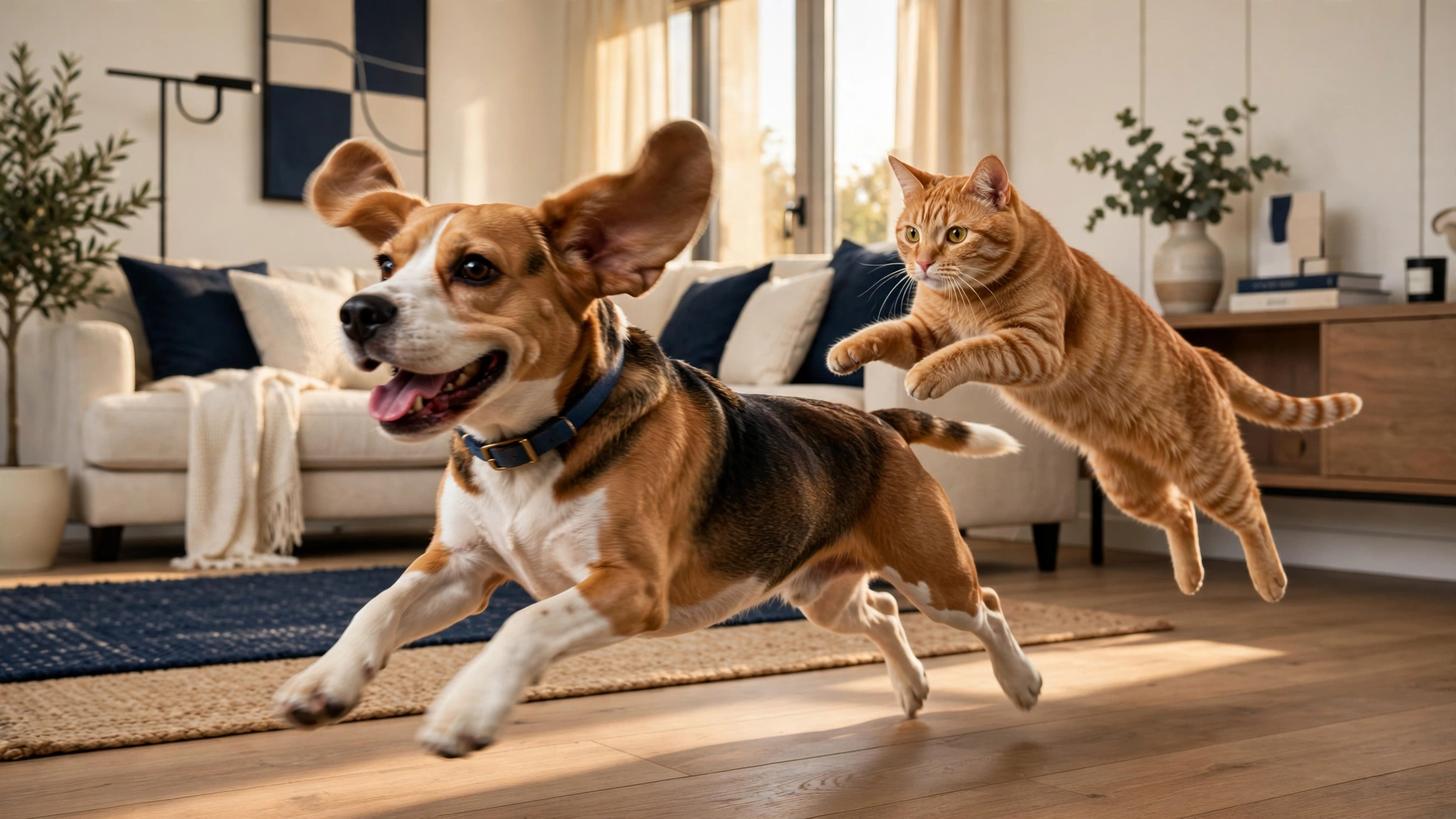
Your dog tucks their hindquarters and tears laps around the yard. Your cat bolts down the hallway at 9 p.m. and skids into the wall. Nearly every pet owner has seen these sudden bursts of speed, and most ask the same thing: what is going on?
The scientific name is frenetic random activity periods, or FRAPs. Veterinary sources describe them as common and usually normal, with some important exceptions. Below is what those sources say about possible causes, what context to look at, and when to involve your veterinarian.
Do researchers know why pets get zoomies?
Not exactly. Cornell University's College of Veterinary Medicine quotes veterinary behavior resident Dr. Pamela Perry: "There is no known specific cause of FRAPs in dogs." PetMD, citing veterinary behaviorist Alison Gerken, DVM, DACVB, says the same about cats: there is no definitive research on why it happens. What follows are the explanations veterinary behavior specialists consider plausible, not proven causes.
Zoomies in dogs
Dr. Perry says zoomies appear to be a way to release pent-up energy or perhaps relieve stress. She gives the example of a dog home alone all day with little to do, who may zoom around to expend energy after hours of under-stimulation. Zoomies can also follow strong excitement, such as an owner coming home after a long absence.
Cornell lists times when dogs may get them:
- When you get home from work
- Late in the evening
- During play
- During training if the dog gets overstimulated
- After defecating
- When something exciting happens
Zoomies are most common in puppies and young dogs, Cornell notes, though many dogs keep getting them occasionally throughout life. Dr. Perry adds that if a dog has frequent zoomies or has them at inconvenient times, such as while you are asleep, they may be telling you they need more exercise and mental stimulation.
Zoomies in cats
PetMD's article, reviewed by a veterinarian and featuring two board-certified veterinary behaviorists, describes several possible contributors:
- Energy release. Dr. Gerken says playful zoomies often happen when a cat has been inactive and suddenly feels energized. This may be especially true for indoor cats with fewer chances to exercise.
- Time of day. Cats are crepuscular, meaning most active at dawn and dusk, so early morning and evening bursts are common.
- Hunting instincts. Dr. Gerken suggests that sudden sprints and sharp turns may reflect predatory behavior.
- After the litter box. Dr. Elizabeth Stelow, DVM, DACVB, notes that defecating stimulates the vagus nerve, which can lead to a feeling of release, and that depending on the cat, this may lead to excitement and zoomies. She says the same is seen in dogs.
- Triggers. Dr. Stelow has seen zoomies after conflict during play with another cat, catnip or silvervine, sudden noises, and chasing a ball.
- Age. Kittens and young cats tend to have frequent, intense zoomies. Senior cats may still have them, usually less often.
PetMD also quotes Dr. Stelow on how zoomies differ from play: they appear almost out of control, while play tends to be more measured and interactive.
Reading the context: playful or distressed?
Because the same running can come from different states, body language and circumstances matter most.
Signs that point to fun. Cornell says a happy zooming dog is loose and even wiggly, may bounce around you as they slow down, may let the tongue flap out and may play bow. Tucked hindquarters and tail while running are common and not necessarily a sign of fear. For cats, Dr. Gerken describes playful zoomies with relaxed body language: ears neutral or forward, tail upright or gently swishing, and possibly chirps or meows.
Signs that point to distress. Cornell says a frightened dog is more tense with wide eyes and a tightly tucked tail that stays tucked to the belly even when stopping, possibly with the head low and ears folded back. In cats, PetMD lists tense posture, dilated pupils, flattened ears and a puffed-up or flicking tail as signs that zoomies may stem from anxiety, and says anxious cats often look uncoordinated or frantic. Our guides to dog body language and cat body language cover more of those cues.
Keeping zoomies safe
Cornell says zoomies themselves will not hurt a dog, but a dog running at full speed without a plan can get hurt or break something. Dr. Perry recommends keeping zooming dogs away from stairs, slippery floors, obstacles and the road, using an enclosed space when off-lead, and choosing grass, carpet or packed dirt over hard floors, ice, gravel or sand. Filling or marking holes in the yard also helps. The same common-sense checks apply indoors for cats: clear the runway of fragile items and slippery rugs.
When to talk to your veterinarian
Both sources point to a few situations:
- Pain, fear or anxiety during the episode. Cornell says that if a dog zooming around appears in pain, frightened or anxious, the owner should investigate the cause by seeking veterinary help. For cats, Dr. Stelow suggests that if a cat appears to be in pain, vocalizes or seems to be running from something out of fear, owners should record the behavior and show it to their vet. A short phone video is helpful because episodes rarely happen in the exam room.
- A sudden change in pattern. Dr. Gerken emphasizes monitoring sudden changes in a cat's zoomie behavior, noting that shifts might signal underlying health conditions such as hyperthyroidism or mobility problems. Only a veterinarian can determine whether a change has a medical cause.
- Frequent or badly timed episodes. Dr. Perry suggests that these may mean a dog needs more exercise and mental stimulation. If you are unsure, your vet or a veterinary behaviorist can help you sort out the cause.
Giving zoomies a good outlet
Cornell suggests physical options such as hikes, jogs depending on age, toy play and swimming, and mental ones such as new tricks, scent games like finding a hidden treat, and walks in new places with new smells. For cats, Dr. Stelow recommends regular interactive play, rotating interactive toys, treat-dispensing toys, cat trees for climbing and perching, scratchers, and safe outdoor access through a catio or enclosed space. Dr. Gerken cites research linking play to better welfare in cats.
The short version
A burst of running with a loose body, bouncy movement and playful signals is usually a normal release of energy. Tension, fear, pain or a sudden change from your pet's usual pattern is a good reason to call your veterinarian. Record what you see, and note when it happens and what came before it.
Sources
- Cornell University College of Veterinary Medicine, Riney Canine Health Center: What are zoomies?
- PetMD: Why Do Cats Get the Zoomies? (reviewed by Hannah Hart, DVM; quotes Alison Gerken, DVM, DACVB, and Elizabeth Stelow, DVM, DACVB)
This article is general education and does not diagnose or replace advice from your veterinarian or a qualified behavior professional.
